Blog article
Signs of Behavioral Addictions
Process addictions don't involve substances—but they activate the same reward system. Here are the core signs that a behaviour may have become a compulsive pattern.
What counts as a behavioral addiction
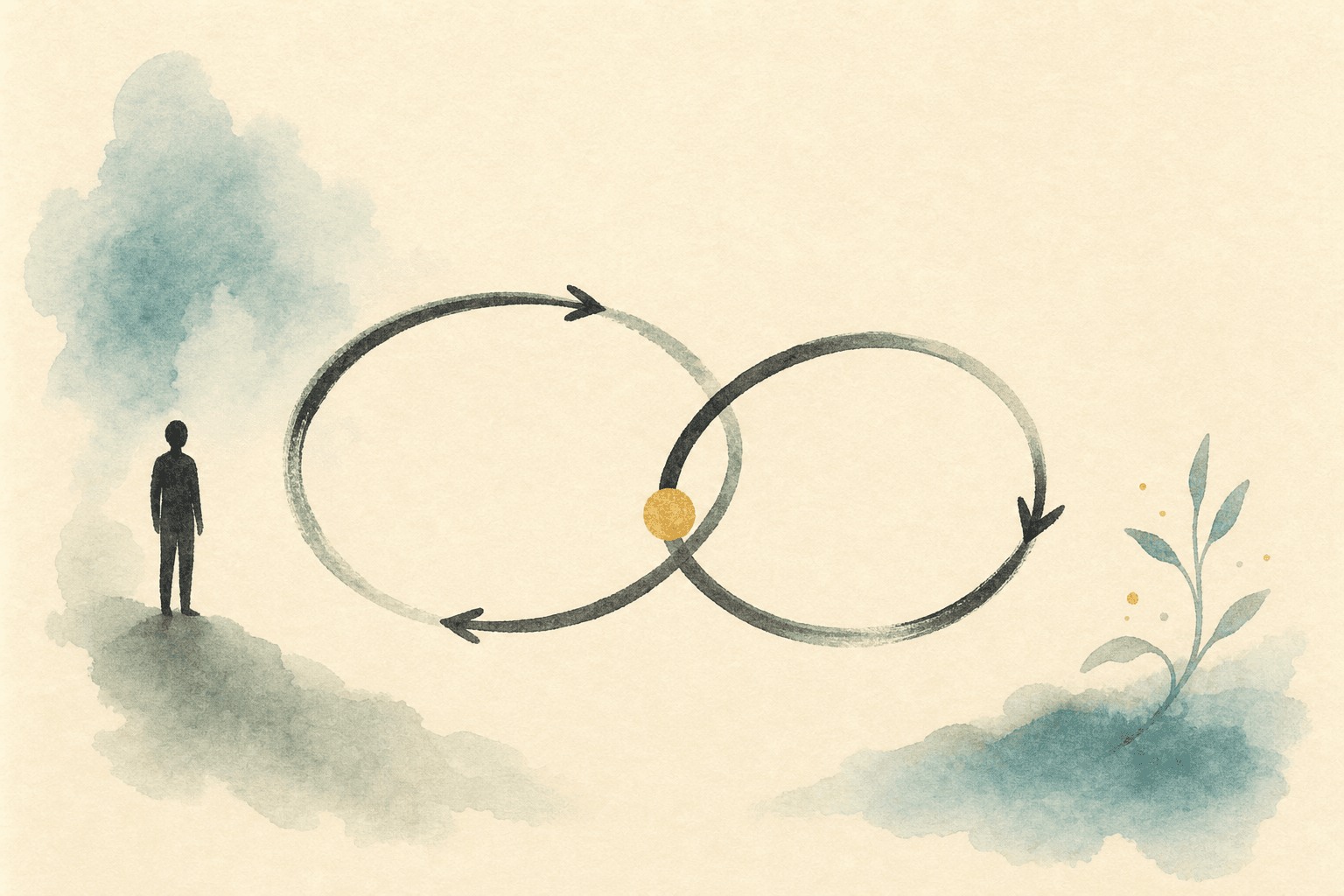
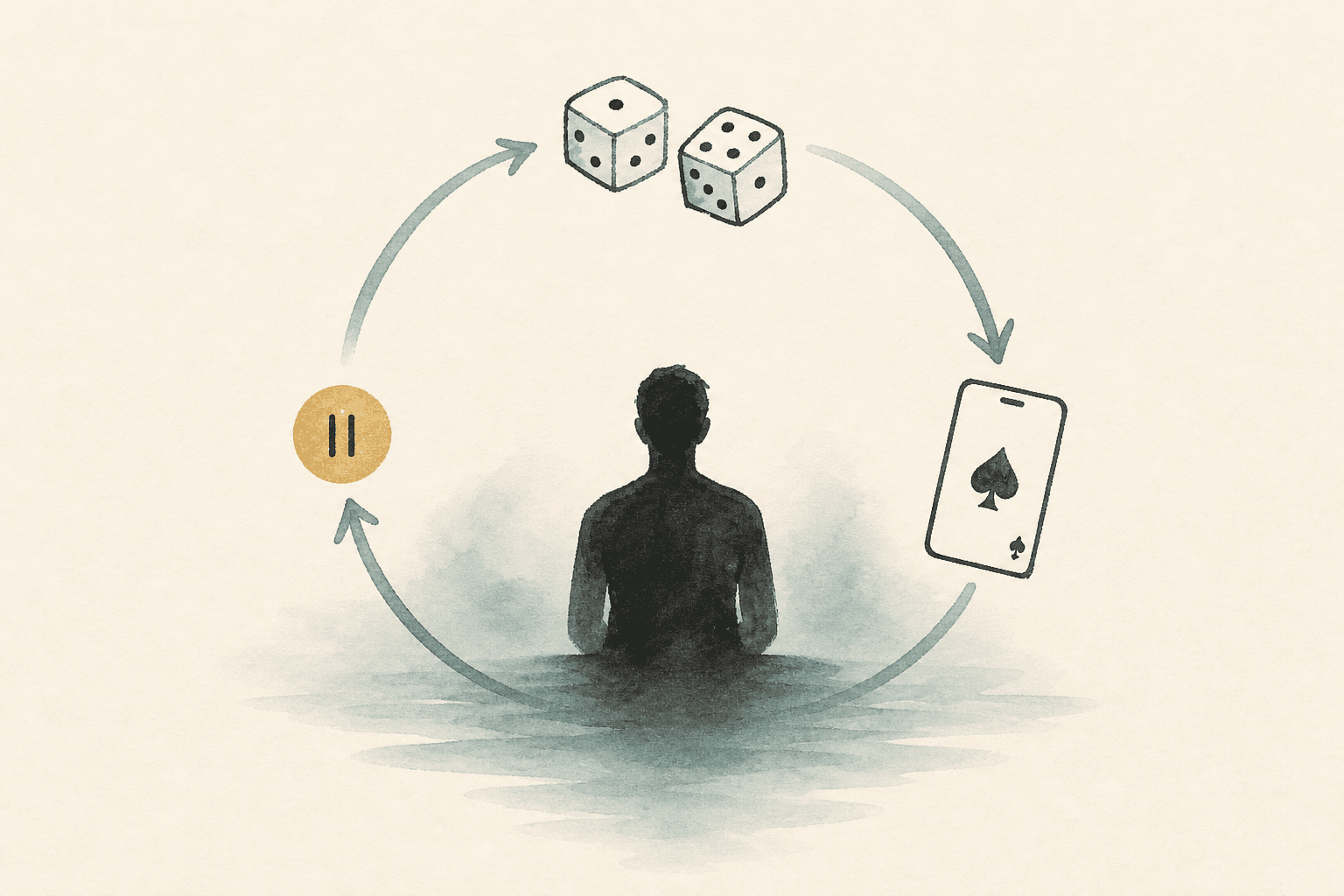
Behavioral (process) addictions don't involve substances—but they activate the same reward system and follow the same loop: trigger, craving, behaviour, brief relief, then repeat.
Instead of chemicals, the "high" comes from dopamine linked to actions: winning, scrolling, buying, attention, achievement, or escape. Because many of these behaviours are normal parts of daily life, the pattern can be harder to recognise than substance use.
This article describes common warning signs across behavioural addictions. It is educational, not a diagnosis. If you are worried about your safety or someone else's, seek appropriate professional or emergency support.
Core signs across all behavioral addictions
These seven patterns appear across gambling, screens, food, shopping, and other process addictions. You may recognise one or several—not every sign needs to be present for the pattern to matter.
1. Loss of control
You do the behaviour longer or more often than intended, and repeated attempts to cut down don't hold.
2. Preoccupation
The activity occupies your thoughts. You plan when and how to do it again, even when other tasks need attention.
3. Cravings and urges
A strong pull to engage appears—often at predictable times, places, or emotional states. Restlessness builds when you can't act on the urge.
4. Emotional dependence
The behaviour becomes a primary way to cope with stress, anxiety, loneliness, boredom, or low mood. Relief is real but usually brief.
5. Tolerance (behavioural version)
You need more time, intensity, risk, or novelty to get the same effect. What once felt enough no longer does.
6. Negative consequences
Work, finances, health, sleep, or relationships are affected—and the behaviour continues despite the harm.
7. Withdrawal-like symptoms when stopping
When you try to pause or reduce, irritability, anxiety, low mood, or restlessness can appear—even without a physical substance.
Gambling (Gambling Disorder)

Gambling disorder is recognised in clinical frameworks. Warning signs often include chasing losses and escalating risk to recover money or excitement.
- Chasing losses — returning to win back what was lost
- Increasing bet size or frequency over time
- Financial secrecy, debt, or borrowing to gamble
- Irritability or restlessness when unable to gamble
Internet addiction
Problematic internet use often shows up as time distortion and neglect of offline responsibilities rather than a single app or site.
- Excessive time online with difficulty stopping
- Neglect of offline life, sleep, or relationships
- Loss of time awareness — hours passing unnoticed
- Using the internet mainly for escape or numbness
Social media addiction
Social media patterns often tie mood to feedback loops: likes, comments, comparison, and the pull to check again.
- Constant checking, even in inappropriate moments
- Mood tied closely to likes, comments, or follower changes
- Comparison and validation-seeking that affects self-worth
- Difficulty being present offline
Gaming addiction (Internet Gaming Disorder)
Gaming disorder involves impaired control and priority given to gaming over other life areas, often with long uninterrupted sessions.
- Long, uninterrupted sessions that are hard to end
- Neglecting sleep, meals, or responsibilities
- Emotional dependence on in-game progress or status
- Irritability or distress when gaming is restricted
Pornography addiction
Compulsive pornography use often involves escalation, secrecy, and reduced engagement with real-life intimacy or connection.
- Escalation in content type or frequency over time
- Secrecy, shame, or guilt around use
- Reduced real-life sexual or emotional engagement
- Using pornography mainly to regulate mood or stress
Sex addiction
Compulsive sexual behaviour patterns may involve risk, repetition despite consequences, and emotional highs followed by crashes.
- Risky or compulsive sexual behaviour that feels driven rather than chosen
- Repeated patterns despite relationship or health consequences
- Emotional highs and crashes after acting out
- Preoccupation that interferes with daily life
Shopping addiction (compulsive buying)
Compulsive buying is often less about the item and more about the brief relief of purchase—followed by regret or financial pressure.
- Impulsive purchases that weren't planned
- Buying mainly for emotional relief, not need
- Financial stress, debt, or hiding spending
- Guilt or shame after buying
Food addiction / Binge Eating Disorder

Binge eating patterns involve loss of control over eating quantity or speed, often followed by guilt or shame. This is distinct from occasional overeating.
- Eating large amounts quickly, beyond comfortable fullness
- Loss of control during eating episodes
- Guilt, shame, or distress afterward
- Using food as the main way to cope with difficult emotions
Exercise addiction
Exercise addiction can hide behind "healthy" labels. The key question is whether training continues despite injury, rest needs, or life imbalance.
- Training despite injury or medical advice to rest
- Anxiety, irritability, or guilt when missing workouts
- Compulsive routine that overrides other priorities
- Exercise used mainly to avoid feelings rather than for wellbeing
Work addiction (workaholism)
Workaholism is not simply working hard—it is difficulty stopping, guilt when resting, and life organised around work as the primary source of worth or relief.
- Inability to stop working or mentally switch off
- Guilt or anxiety when resting or taking leave
- Burnout paired with continued overwork
- Relationships or health neglected for work
Key difference vs substance addiction
Behavioral addictions don't usually involve physical withdrawal in the same way as alcohol, opioids, or benzodiazepines. There may be no obvious "substance" to remove.
But both behavioural and substance addictions use the same brain reward system: trigger, craving, behaviour, brief relief, reinforcement, repeat. That shared loop is why pattern-focused support can address many types of addiction—not only one label.
For substance dependence with medical withdrawal risk, professional medical guidance is essential. Behavioural patterns still deserve serious attention when control, mood, and life areas are affected.
When it becomes serious
Many people recognise themselves in one or two signs without every item on a list. These markers suggest the pattern may need more than willpower alone:
- You feel controlled by the behaviour rather than choosing it
- It replaces important parts of life — connection, rest, work, or health
- You can't stop despite wanting to, or pauses don't last
- Your mood depends heavily on the behaviour or on being able to do it
- Secrecy, shame, or conflict around the pattern is increasing
Why behavioral addictions are harder to spot
Behavioral addictions are often harder to spot because they can look like normal life: scrolling, shopping, working late, training hard, or socialising online.
There may be no track marks, no bottle, no obvious physical sign. Internally, though, the same loop can be running — and the cost can be just as real in sleep, relationships, money, and mood.
- They're socially acceptable or even praised (productivity, fitness, hustle)
- They're built into daily routines and devices
- There's no single "substance" to remove — the trigger is often context or emotion
- Shame can delay asking for help
The signs of my trigger — lyric video
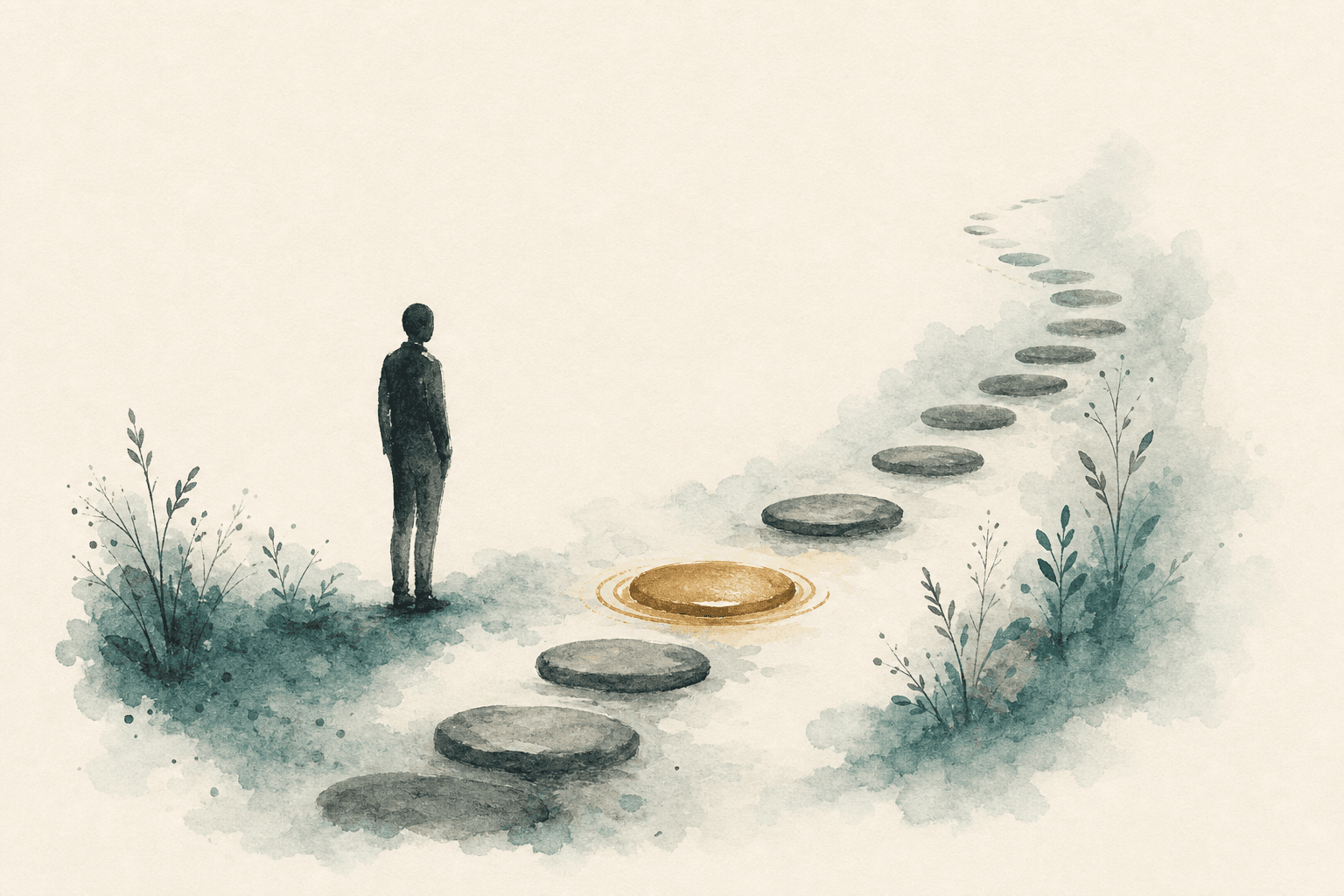
"The Signs of My Trigger" is written for this article — not the cross-addictions song. It uses a sad, metaphorical lens (trigger, the road, the pause) to name the same reward loop without a substance: loss of control, cravings, tolerance, harm, and the behavioural addictions listed above.
Watch the lyric video below for the full song with synced lyrics — calm, pattern-focused framing, not a diagnosis, and not emergency care.
Grounded perspective and next steps
Recognising signs of behavioral addictions is not about labelling yourself. It's about noticing whether an activity has become the main way you cope, escape, or feel okay — and whether the loop is costing you more than it gives.
Pattern-focused support — including hypnotherapy and EFT-informed methods — may help with trigger awareness, urge pauses, and new responses. This is supportive work, not a cure guarantee, and it does not replace medical or psychiatric care where needed.
If several signs above resonate, a confidential enquiry can be a calm first step. You can also read about cross-addictions, the unified addiction loop model, or signs of substance addictions for the full picture.