Blog article
Cross-Addictions: When One Pattern Becomes Another
Stopping one addiction does not always end the underlying loop. Cross-addiction is when stress, emotion, or habit wiring finds a new outlet — and that pattern can be understood and worked with.
What cross-addiction really means
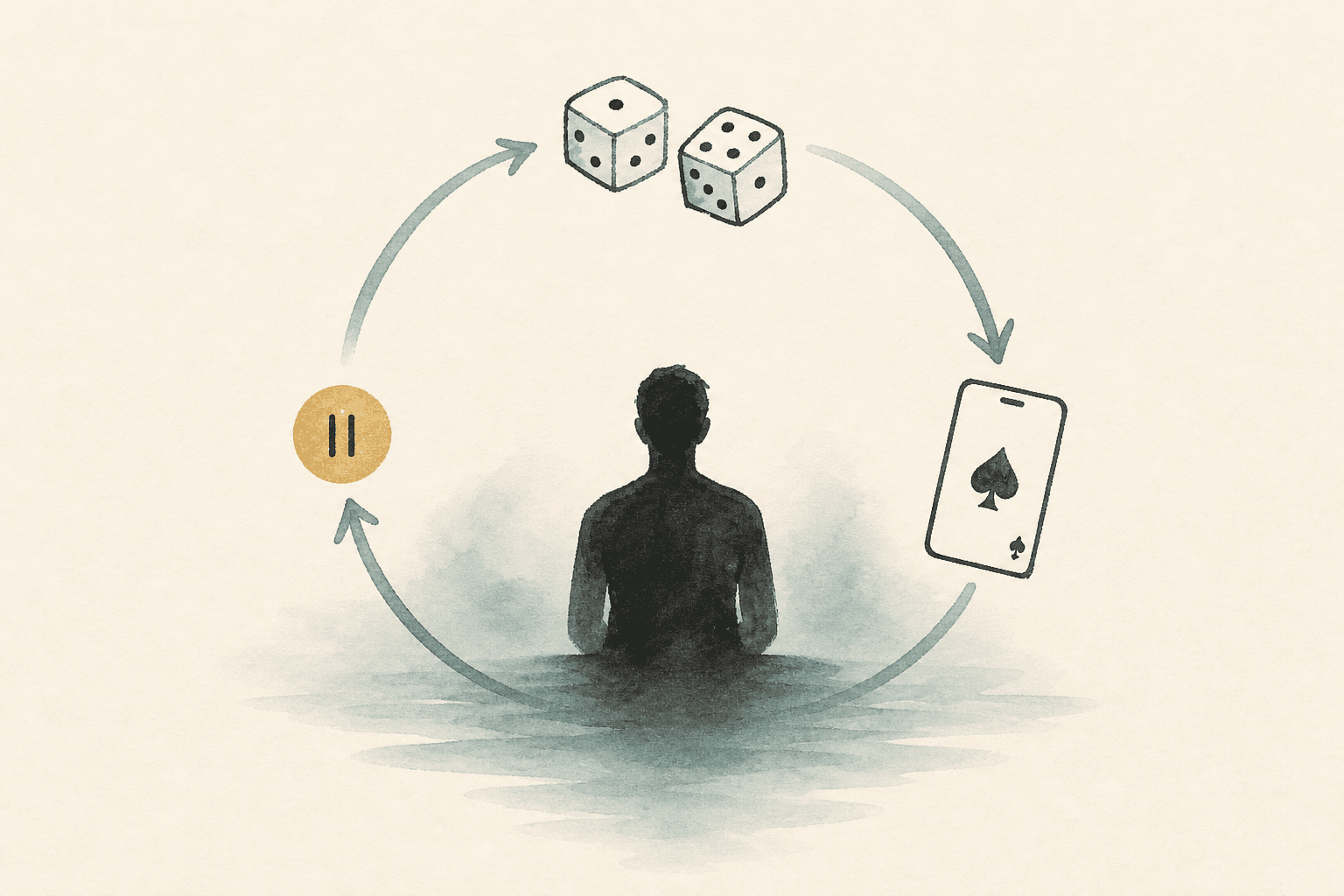
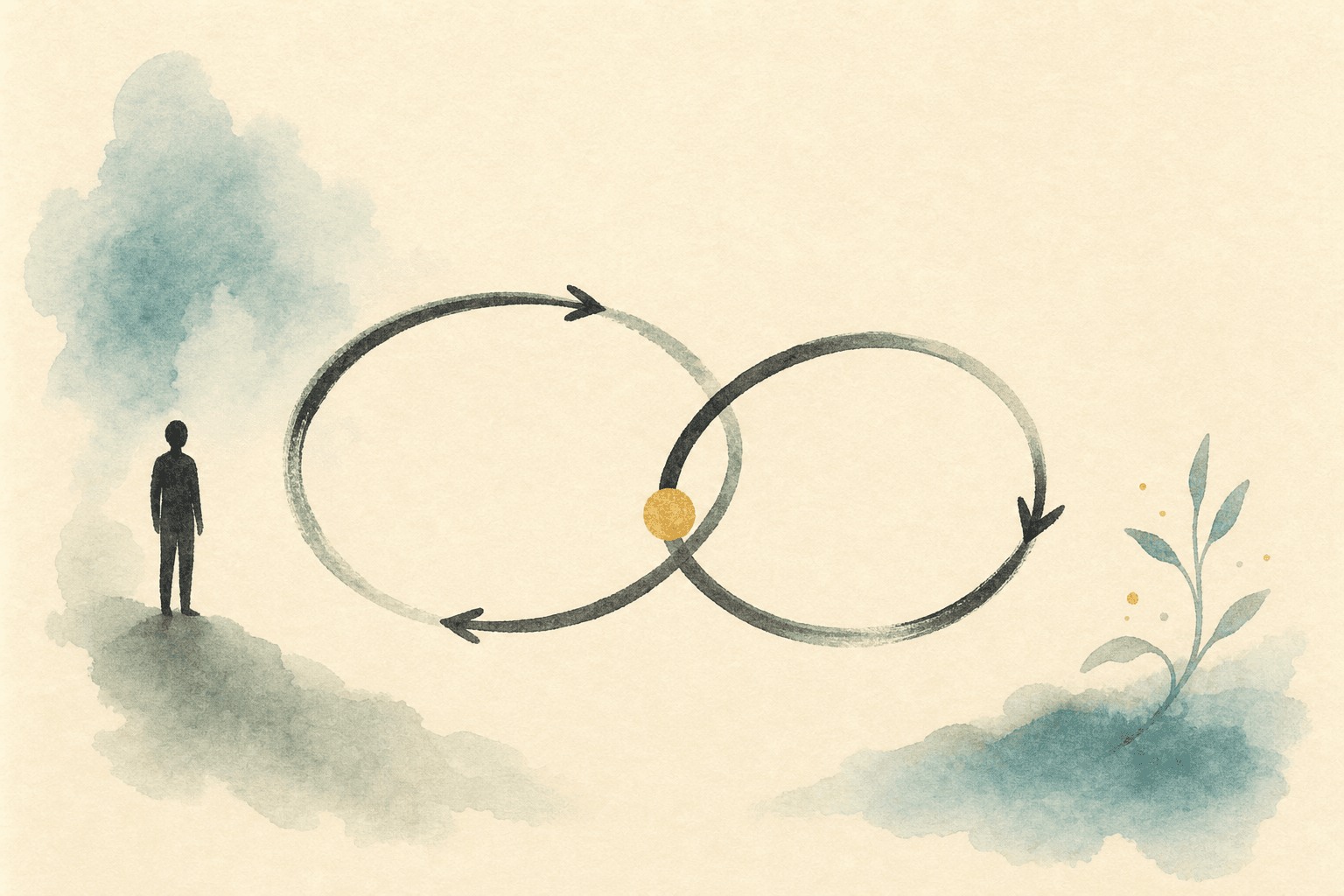
Cross-addiction is not simply having more than one problem at once. It often means the same internal loop — trigger, craving, behaviour, short-term relief, then repeat — has found a new expression.
Someone may stop drinking but notice stronger food cravings, more scrolling, riskier spending, or renewed nicotine use. The surface behaviour changed; the pattern may not have.
At Healing From Your Addiction, the focus is on that shared pattern, not shame about switching between labels.
The same loop, different outlet
Most cross-addictions fit the addiction loop described across this site:
Trigger
Stress, loneliness, boredom, conflict, fatigue, or a familiar place or time of day.
Craving or urge
A strong pull toward relief, escape, stimulation, or control.
Behaviour
Alcohol, gambling, food, pornography, work, gaming, shopping, or another compulsive action.
Short-term relief
Numbness, excitement, validation, distraction, or a sense of calm — often brief.
Reinforcement
The brain learns: this works (for now). The loop becomes faster and more automatic.
Same loop, new name — lyric video
This song follows the cross-addiction loop in plain language: one habit eases, another urge arrives, and the same trigger–craving–relief pattern finds a new outlet. The lyrics map to the sections above — including both choruses and the bridge about pattern work and medical safety where withdrawal risk rises.
How cross-addiction commonly shows up
These are examples, not a checklist. Many people recognise one or two patterns rather than every type.
Substance to substance
One chemical dependence is replaced by another, such as alcohol use shifting toward prescription sedatives or stimulants.
Substance to behaviour
Substance use eases but gambling, food, pornography, or overwork intensifies.
Behaviour to substance
A behavioural habit is followed by drinking, cannabis, or nicotine to cope with crash or stress.
Behaviour to behaviour
One compulsive habit swaps for another — for example gaming increasing when social media use is reduced.
Cross-addiction during recovery
This can be especially confusing when someone has made genuine progress on their main concern. New urges may feel like failure, but they often signal that the underlying loop still needs attention.
Common recovery-phase shifts include increased sugar or food use after stopping alcohol, vaping after other substances, or leaning heavily on work, exercise, or online validation for stability.
- Notice whether relief is still the main goal of the new behaviour.
- Track high-risk times of day and emotional states, not only the substance or app involved.
- Build alternatives that give some reward — rest, connection, movement, structure — not only restriction.
- Seek medical guidance where withdrawal or substance switching carries safety risk.
Why the root pattern matters more than the label
Treating only the visible behaviour can leave the loop intact. That is why two people with different addictions may benefit from similar work: mapping triggers, slowing automatic reactions, and building new responses under stress.
Unresolved trauma, chronic stress, low emotional regulation, and identity shifts after stopping a long-term habit are frequent drivers. Cross-addiction is often a signal to work at this layer, not proof that change is impossible.
How hypnotherapy and EFT-informed support can help
Healing From Your Addiction offers confidential, pattern-focused support — not emergency or medical detox care. Where clinical withdrawal is possible, medical oversight comes first.
Hypnotherapy may help strengthen pause points before automatic behaviour, while EFT-informed techniques can reduce the emotional charge that fuels urges. Together with practical routines between sessions, this targets the loop that cross-addiction repeats rather than only the latest symptom.
Pattern mapping
Identify personal triggers, environments, and emotional cues that precede substitution.
Craving interruption
Practice calmer responses when the urge rises, instead of debating willpower alone.
Relapse and substitution awareness
Plan for high-risk weeks when one behaviour drops and another may spike.
Related reading on this site
These articles connect directly to cross-addiction and may help you see the wider picture:
- The core pattern behind all addictions — how the universal loop works.
- One unified model of addiction — why different behaviours share the same engine.
- Signs of behavioral addictions and signs of substance addictions — recognising warning signs in each layer.
- Psychological vs physical dependence — when medical care and pattern work both matter.
A grounded next step
If you recognise substitution patterns — or worry they may appear after you stop one behaviour — you do not have to map it alone. Explore the programme that fits your main concern (gambling, food and binge eating, or other categories), or start a confidential enquiry if you are unsure where to begin.
Change is usually gradual: same brain, same loop, new patterns built through repetition, support, and honest awareness.