Blog article
Addictions develop from a combination of biological, psychological, and environmental factors.
Addictions don’t appear randomly. They usually develop from a combination of biological, psychological, and environmental factors that shape how a person learns to cope, seek reward, and handle discomfort.
Overview
Addictions don’t appear randomly. They usually develop from a combination of biological, psychological, and environmental factors that shape how a person learns to cope, seek reward, and handle discomfort.
Think of it less as “one cause” and more as a stack of influences over time.
1. Brain chemistry & reward sensitivity
At the core of most addictions is the brain’s reward system.
This is tied to the Dopamine reward system
- Dopamine reinforces behaviors that feel good
- Some people are more sensitive to rewards (or need more stimulation)
- Repeated exposure strengthens habit pathways
2. Early exposure
The earlier a behavior or substance is introduced:
Examples:
- The more it shapes brain development
- The more “normal” it feels
- The stronger the habit pathway becomes
- Early alcohol, nicotine, or drug use
- Early exposure to screens, gaming, or pornography
3. Emotional coping patterns
One of the biggest drivers:
Over time:
- Using something to escape stress, anxiety, loneliness, or pain
- Learning: “This makes me feel better”
4. Trauma & unresolved experiences
Past experiences can create vulnerability:
These often lead to:
- Childhood neglect or instability
- Abuse or loss
- Chronic stress
- Emotional dysregulation
- Need for escape or control
5. Environment & social influence
Your surroundings matter more than most people think:
If a behavior is normal in your environment, it’s easier to adopt.
- Peer pressure or normalization
- Family patterns (what you grew up seeing)
- Availability and access
6. Personality traits
Certain traits increase risk:
These don’t cause addiction—but they tilt the odds.
- Impulsivity
- Sensation-seeking
- Perfectionism
- Low stress tolerance
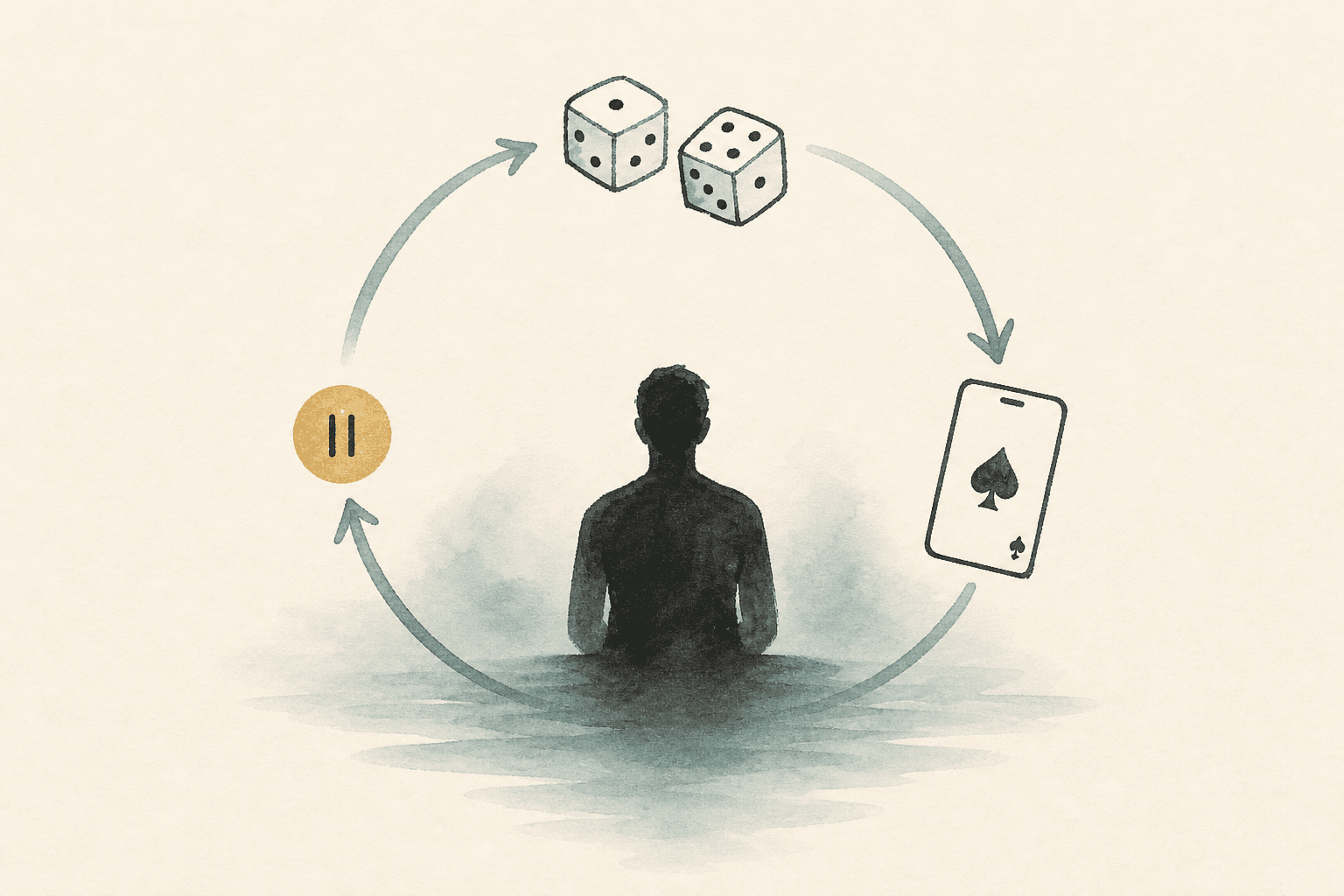
7. Habit formation loops
Addictions are reinforced through repeated cycles:
This is explained by the Habit loop
Over time, it becomes automatic.
- Trigger → behavior → reward → repeat
8. Mental health conditions
Underlying conditions often fuel addiction:
People often self-medicate without realizing it.
- Anxiety
- Depression
- ADHD
- Trauma-related disorders
9. Lack of alternative rewards
If life lacks:
Then quick, artificial rewards become more appealing.
- Meaning
- Connection
- Achievement
10. Modern environment (important)
Today’s world amplifies addiction risk:
- Constant stimulation (phones, apps, content)
- Easy access to substances and behaviors
- Systems designed to capture attention
How it all comes together
Addiction usually forms like this:
- Exposure (early or repeated)
- Emotional use (coping)
- Reinforcement (reward loops)= Addiction pattern
A grounded perspective
Addiction is rarely about weakness. It’s usually:
What reduces the risk (protective factors)
- Strong relationships and support
- Healthy coping skills
- Purpose and structure
- Awareness of habits and triggers
- Balanced lifestyle (sleep, activity, routine)
Important insight
If you understand the inputs, you can change the trajectory.
You don’t need to remove all risk—you need to: